
Social media has become an essential part of our daily lives, occupying our time from the early morning hours to the last moments before going to bed. Many people turn to it as a way to relax or escape work-related stress.
Recent research suggests that excessive social media use before bedtime may reduce sleep quality or shorten sleep duration—particularly among young adults and teenagers.
The key question is: Does social media directly cause sleep disturbances, or does it simply worsen pre existing issues? That’s what we’ll uncover in this blog.
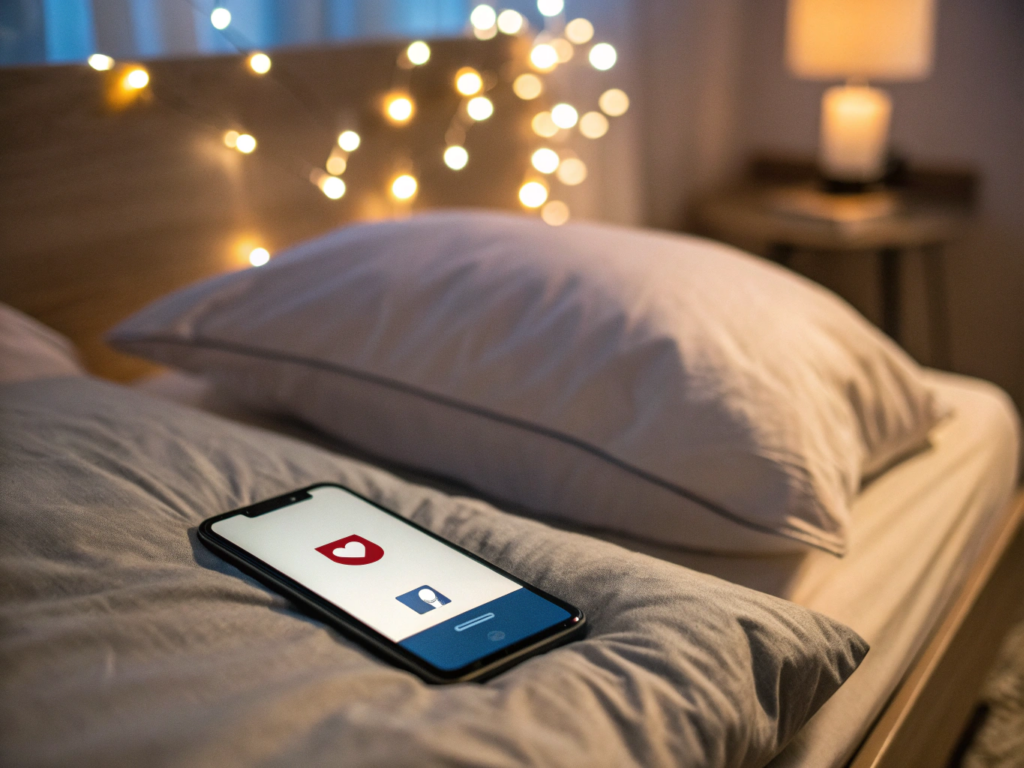
Latest Findings: How Social Media Impacts Sleep
Studies show that heavy social media use before bedtime is often linked to lower sleep quality and shorter sleep duration, especially among adolescents and young adults.
The blue light emitted from phones and tablets reduces melatonin production—the hormone responsible for regulating sleep—making it more difficult to reach deep sleep.
Additionally, constant nighttime scrolling or highly engaging interactions (“doom-scrolling”) stimulate the brain, increase stress levels, and may lead to temporary insomnia.
However, some studies indicate that moderate social media use before bed may not significantly affect total sleep duration, though it can delay sleep onset by approximately 30 minutes. It is also important to note that excessive scrolling isn’t always the direct cause of insomnia—it may instead worsen existing sleep disorders, especially for individuals who already struggle with anxiety or chronic insomnia.
Why Do Screens Affect Brain Activity?
Blue Light:
Blue light emitted from phones and tablets suppresses melatonin production, making it harder to transition into deep sleep.
Nighttime Browsing & Stimulating Content:
Continuous notifications and scrolling increase dopamine release, keeping the brain active and delaying the natural relaxation state needed before sleep.
Who Is Most Affected?
- Teenagers and university students who stay up late using their devices.
- Night-shift workers who rely on screens during their daytime rest hours.
Practical Tips to Reduce Social Media’s Impact on Sleep Quality
- Limit screen time before bed: Avoid using your phone or tablet for at least one hour before sleeping.
- Enable night mode: This feature reduces blue-light exposure and minimizes its effect on melatonin.
- Set daily usage limits: Keep usage within a controlled window—about 50 minutes per evening, divided into short intervals (e.g., 10 minutes every hour between 5 PM and 10 PM). Apps like Block (Android) and Freedom (iPhone) can help track limits and prevent overuse.
- Replace scrolling with relaxation habits: Try breathing exercises, meditation, or reading a calming book before bed. These activities help your brain unwind and naturally boost melatonin production.
- Establish a consistent sleep routine: Going to bed and waking up at the same time each day helps regulate your circadian rhythm and improves overall sleep quality.
Social media is no longer just a source of entertainment—it has become a daily habit that’s hard to break. Yet excessive nighttime scrolling may have an indirect effect on mental relaxation and sleep quality.
By recognizing these effects and adopting a calmer evening routine, you can significantly improve your daily energy and overall mood.
Start today with a one-week “no-screens-before-bed” challenge, and discover how a simple habit can noticeably enhance your sleep.